

Brought to you by...goClose

Want a free month-end close checklist tool?
Sign up and ditch your Excel checklist (no credit card and no sales call). Create checklists, set approvals, track timelines, leave comments, etc. Smart month-end close checklists for the low low price of $0 (limited availability).
Open-Weight vs Closed AI Models
I am by no means an expert on this topic but I do think there are a few things that every executive (especially CFOs) should understand about open-weight AI models.
This is not about the politics, the distillation/theft topic, the risk to humanity, etc. It is about when, how, and why open-weight models make sense.
Let’s start with some definitions because I don’t think a lot of non-technical folks actually understand the model types or how they can be deployed:
Closed AI Model: These are the AI models that most people think of (ChatGPT, Claude, etc). These closed models have been the “frontier” models because they are so far ahead of everyone else. You can’t download the weights, run the model on your machines, and customization is limited (if available at all).
Open-Weight AI Model: The “weights” are downloadable by anyone to host or sell (subject to the license). It can be customized and trained to produce better outputs for a company.
Weights: the billions of settings inside the AI model that generates the prompt outputs (kinda like software code). “Fine-tuning the weights” means you adjust those settings until it gives better answers.
Closed models are like renting a fully furnished office (WeWork style). Open weights are getting the building plans and keys and then told you have to figure everything else out. You can knock down walls, and change things, but the HVAC bill is now your problem.
Why Use Open-Weight AI Models?
There are two primary reasons you would use open-weight models over the closed frontier models:
Cost - These models can be ~80%+ cheaper than the closed frontier models. Note - often these savings can be misleading (more on that below)
Model Control - below are a few reasons why a company would want to control the model:
Fine-tuning weights - ability to fine-tune may help deliver stronger output for your specific use case.
Data/security control- you host so you control all the data, who has access, privacy, etc.
No vendor lock-in - closed model providers make you sign contracts, can raise prices and you build around their model.
Deployment Type Matters
To evaluate the benefits and potential cons, you need to understand the two ways these open-weight models can be deployed.
API / hosted: This is just like how you use Claude/ChatGPT, but anyone can download open-weight models and sell it to you via API.
Self-hosting: You download the model and run it on your servers (or a rented one).
Model control (benefit #2) is highest when you self-host an open-weight model, but you can fine-tune weights via API if you buy a dedicated environment (if offered by the provider).
There are also possible cost savings in self-hosting the open-weight models, but it is often more expensive than most think…Similar to buying software, there are always hidden costs (hardware, training, people, etc). Self-hosting is often not the right answer unless the fine-tuning or the data/security benefit is a strategic advantage for the company.
Intelligence vs Cost Trade-off
Similar to tokenmaxxing, every company has been on a race to adopt AI and beat the competition. Using the more expensive closed models was a fairly easy answer for a long time because they were sooo much better.
But a couple of things are happening:
The gap is closing between open-weight and closed frontier models (only maybe a few months behind now versus 12+)
Incremental intelligence increases may not matter for most tasks. In many areas, companies don’t need frontier-level intelligence anyway.
Kimi K3, open-weight model released earlier this month, ranks as one of the top models across most benchmarks (apparently it is the best at Excel-based tasks).
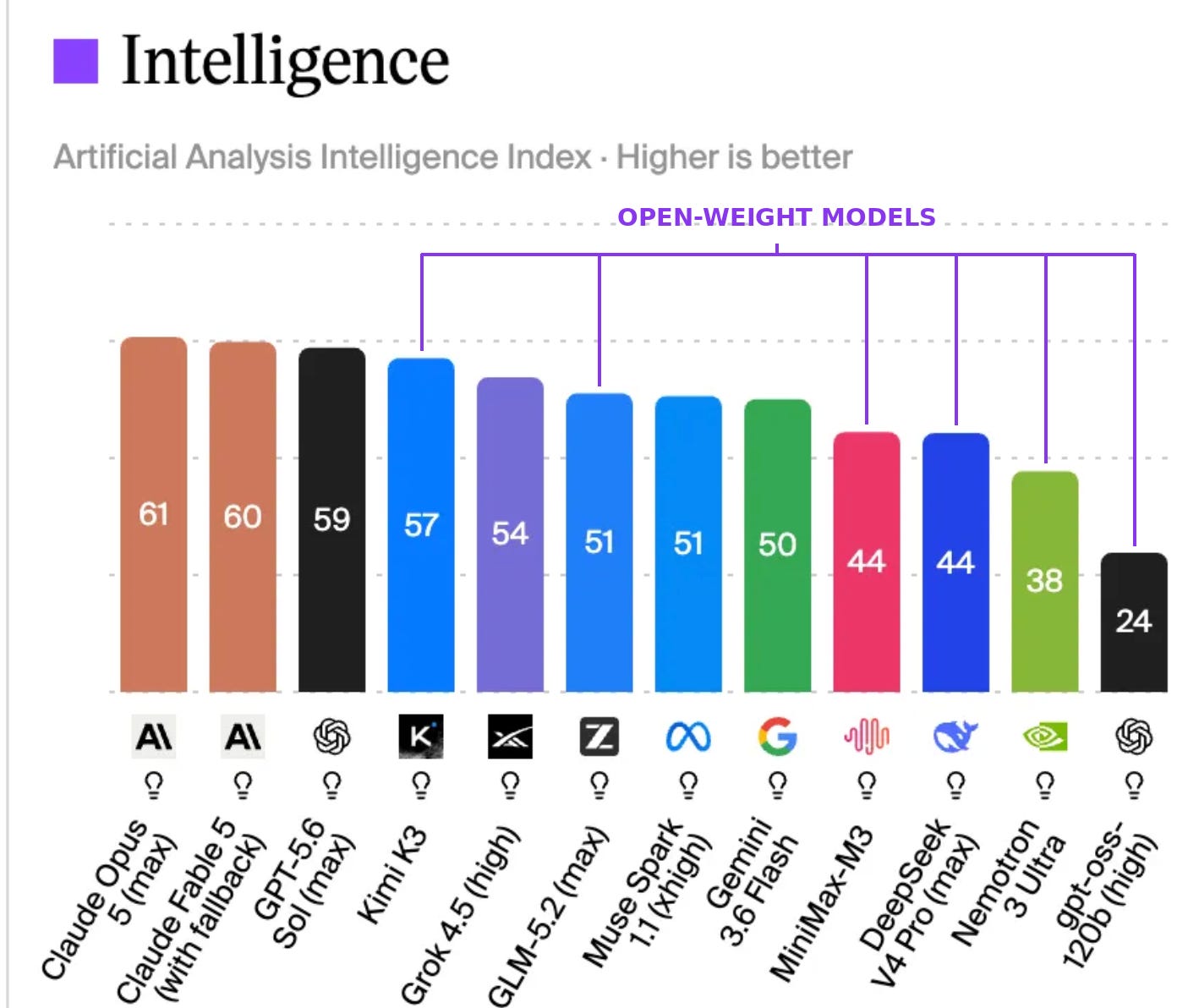
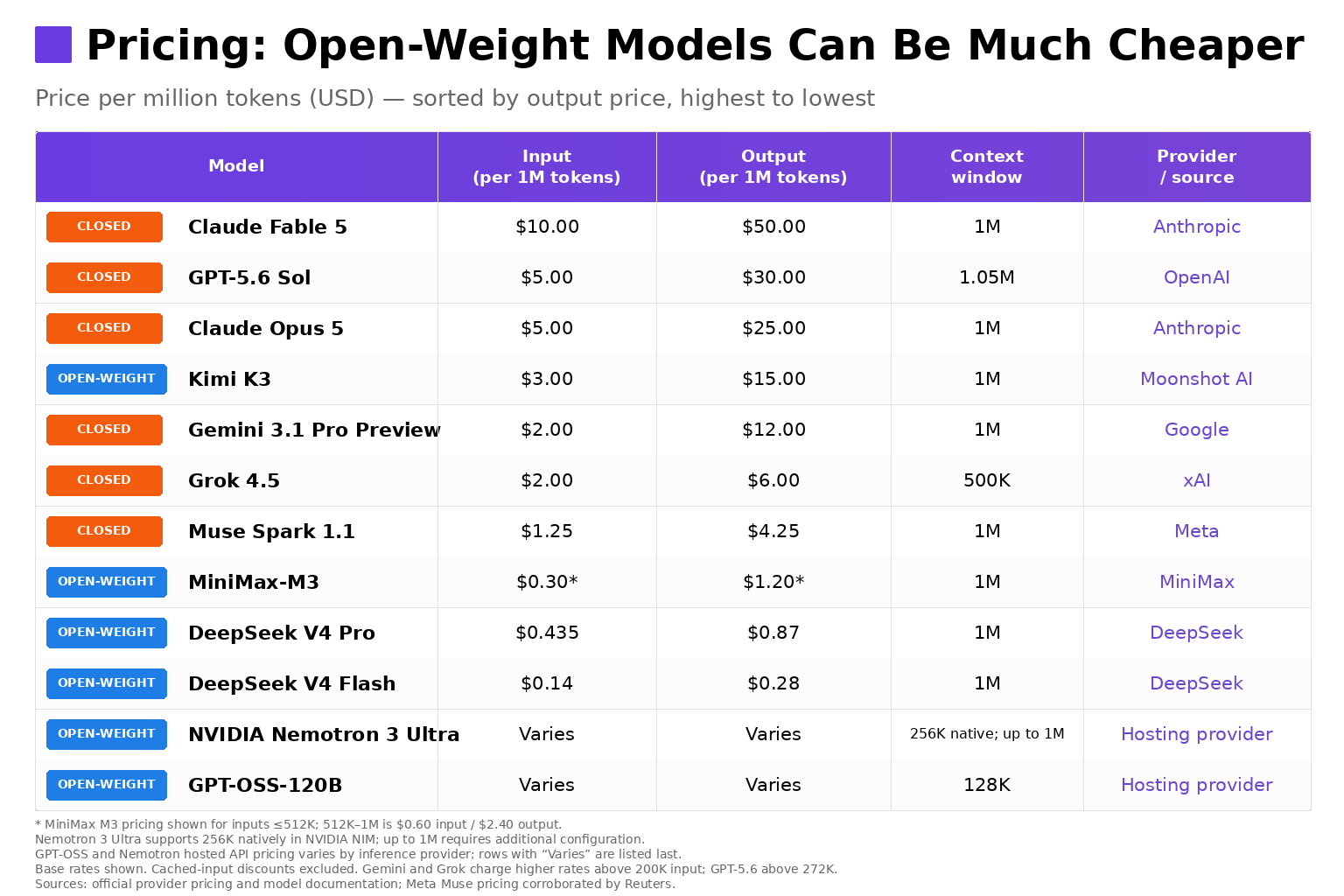
While Kimi appears to be just slightly behind the latest models from claude/chatgpt in terms of intelligence, it is 50-60% the token price. And other slightly less intelligent open-weight models are significantly cheaper (like DeepSeek).
Lower Token Pricing Doesn’t Mean Cheaper
The key financial metric is cost per task. Price per token is one variable of the equation.
A lower price per token is only relevant if it can complete the same task with the same or less tokens than similar models. Some models are much more token-hungry…
Kimi K3’s token prices are 40% lower than Opus 5 (released a few days ago) for just a slightly less intelligent model. ROI seems really high for Kimi, right?
But…on longer-running tasks (like the benchmark below) Kimi K3 was actually more expensive than Opus 5 High (and Opus 5 High scored higher). So this frontier closed model is actually cheaper than the open-weight one!
The cheapest tokens do not always produce the cheapest completed task when the model is token-hungry (ie inefficient).
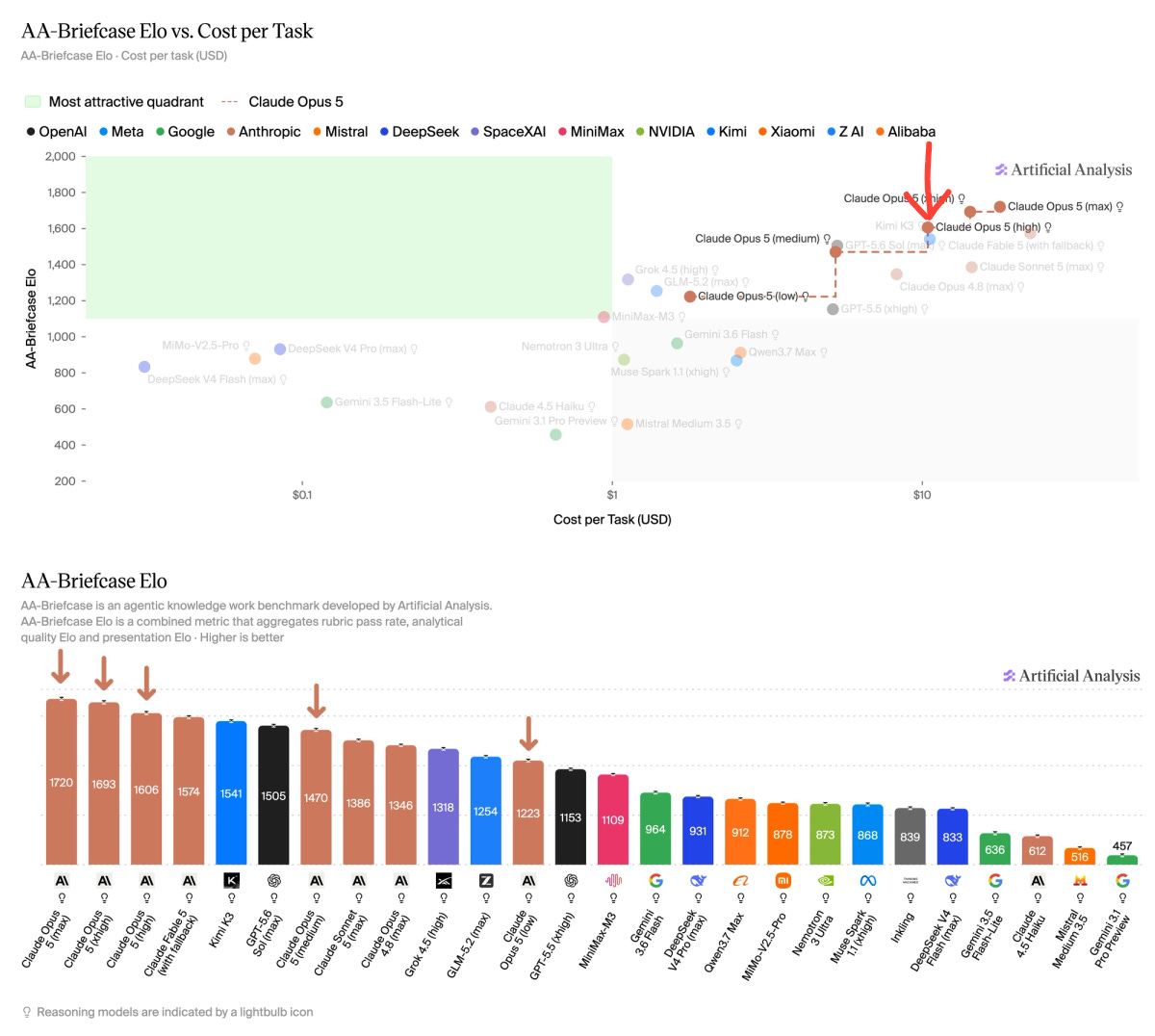
While open-weight models are usually less expensive on a per token basis, make sure you understand the completed task cost difference as well. Open-weight often wins there too, but the difference may be smaller than you think.
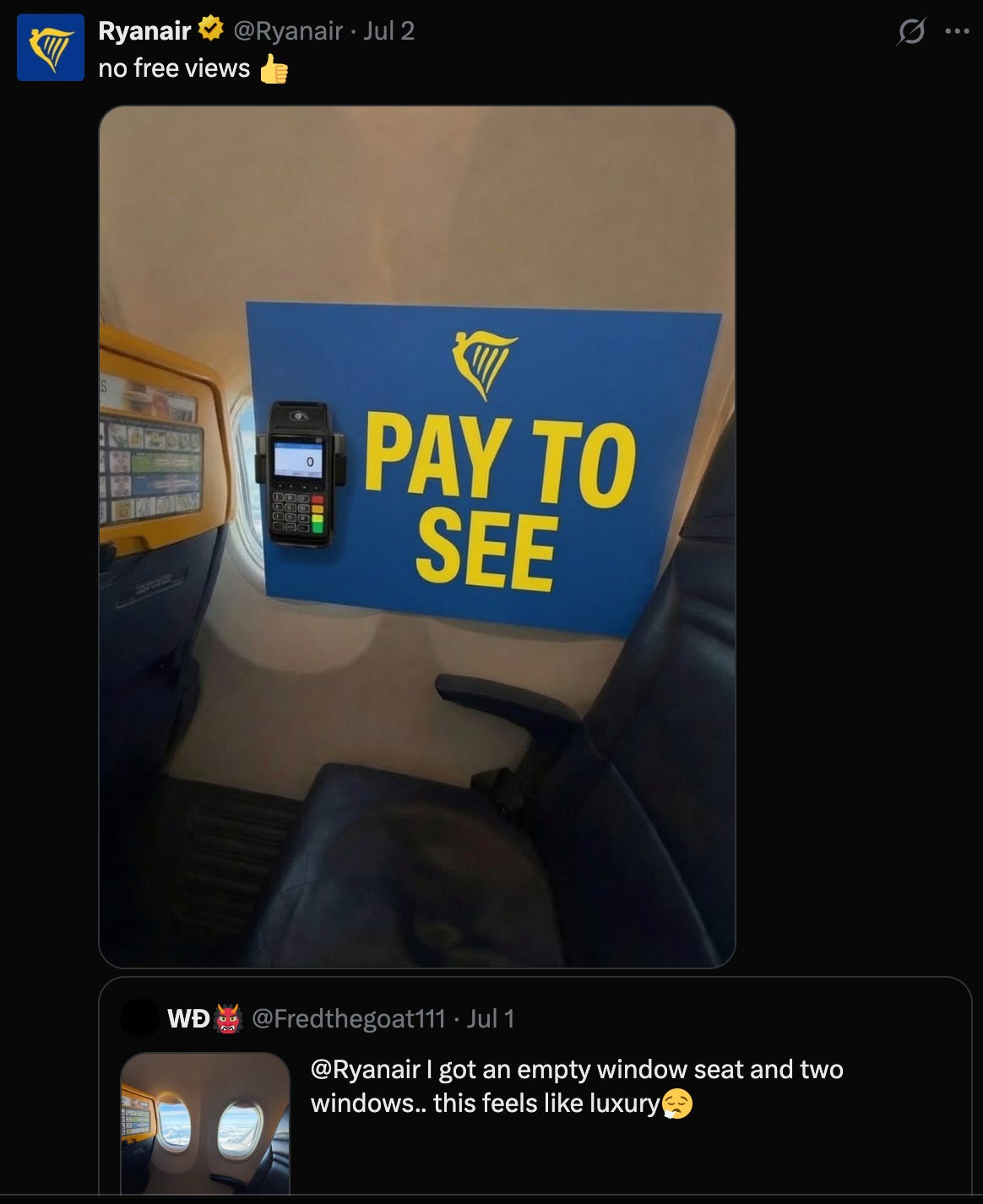
Cheap tokens can be like flying Ryanair: Seems cheap until you realize there are three connections and an overnight layover to get to the next state over.
Ryanair’s social media game is fire though…haha
What About Security Issues With Using Chinese AI Models?
I have talked to many non-engineering folks who think this…
The model may have been created in China, but you (or model providers) can download it and host it in the U.S.
This is what a lot of DeepSeek or Kimi usage is. Other companies download, host, and sell these models via API. China doesn’t have to ever see it. Several U.S. companies provide access to these models via API.
What CFOs Should Do
Most companies probably shouldn’t self-host the open-weight models (particularly the large ones). It’s usually too expensive to be worth it unless you are huge (then maybe you get the economies of scales) and/or there are specific reasons why you need to have greater control of the model.
But everyone should try different models via API. You don’t need the latest frontier model for most tasks and the security/privacy risk isn’t what most people think when they hear about open-weight models created in China…
Importantly, CFOs should understand the terms of service and actual cost per task. If companies can use the frontier models for ~10% of the hardest tasks and cheaper models for everything else, then they will save a lot of money. Most should be able to do this.
Footnotes:
Subscribe and forward this newsletter to your team.
Check out goClose for month-end close (get their free close checklist tool)
Reply to this email and tell me what AI stuff you want to see